


Modern Geometric Versus Freeform Pools Compared
A pool shape changes more than the view from your kitchen window. It affects where guests gather, how children play, how a spa connects to the water, and whether your backyard feels crisp and architectural or relaxed and resort-inspired. When comparing modern geometric versus freeform pools, the right choice is less about following a trend and more about designing around your home, property, and lifestyle.
For homeowners in Montgomery County and North Harris County, that distinction matters. A pool should feel like it belongs on your property from the first day, while giving your family a place to make memories for years to come.
Modern Geometric Versus Freeform Pools: The Core Difference
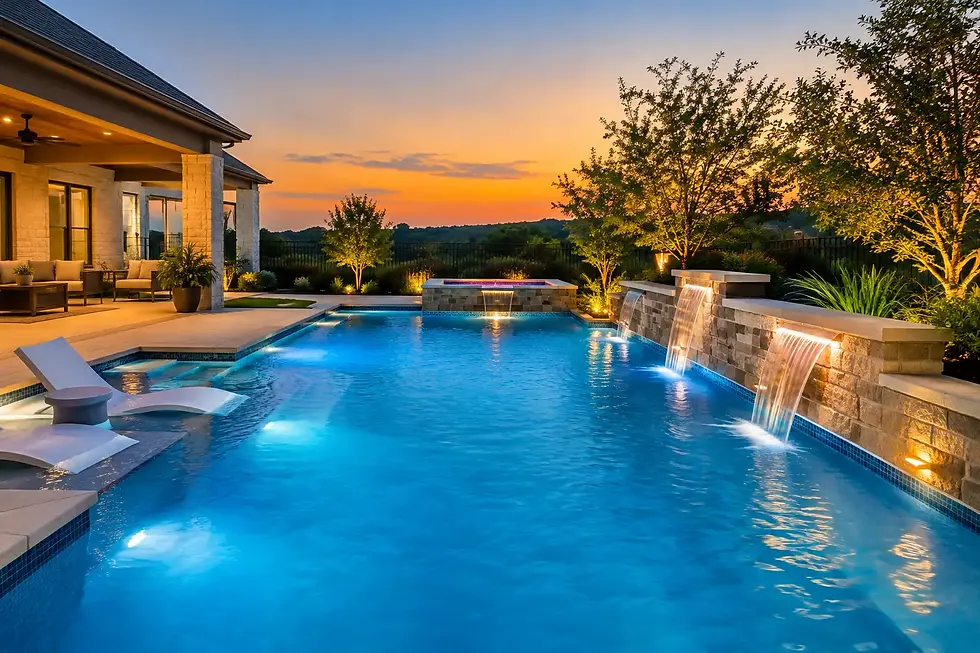
Modern geometric pools use intentional lines, defined corners, rectangles, squares, and clean angles. They often complement contemporary homes, updated patios, and outdoor living spaces built around structure and symmetry. Picture a long rectangular pool with a raised spa, a tanning ledge, linear fire features, and large-format pavers. The feeling is polished, calm, and purposeful.
Freeform pools use curves, organic edges, and a more natural flow. Their shapes can suggest a private lagoon, a hill-country retreat, or the softer layout of a traditional backyard garden. Rock waterfalls, boulder accents, curved patios, and tropical plantings are common companions, though a freeform design can also be refined and understated rather than heavily themed.
Neither style is inherently more luxurious. Luxury comes from thoughtful proportion, quality materials, and the way every element works together. A well-designed geometric pool can feel warm and inviting, while a freeform pool can look sophisticated and tailored. The question is which one supports the way you want to live outdoors.
When a Geometric Pool Feels Right
A geometric pool is often the natural choice when your house has strong architectural lines. Modern, transitional, and contemporary homes tend to benefit from a pool that echoes the roofline, windows, patio layout, or interior finishes. The result can make the entire property feel more connected.
This style also suits homeowners who want a backyard with distinct zones. A rectangle or modified rectangle makes it easy to organize an outdoor kitchen, covered patio, dining area, fire feature, and lounge seating around a clear focal point. If you enjoy hosting evening gatherings, linear design can create a dramatic setting after dark with integrated lighting and flame features.
Geometric pools are practical for lap swimming, too. A longer straight run gives swimmers room for exercise and gives families a clear area for games. That does not mean every geometric pool needs to be a simple rectangle. Offset corners, L-shapes, perimeter-overflow details, sun shelves, and integrated spas can make the design feel personal without losing its clean character.
There are trade-offs. Strong lines call for careful alignment and precise construction. On a compact or irregularly shaped lot, forcing a strict rectangle into the available space can leave awkward unused areas. A skilled designer can soften the surrounding hardscape or modify the pool footprint, but the architecture should still guide the decision.
When a Freeform Pool Creates the Better Escape
Freeform pools shine when the goal is to make the backyard feel less built and more discovered. Curving edges can wrap naturally around mature trees, accommodate an unusual property line, or create a welcoming transition between the home and a larger yard. For properties with more room to spread out, freeform design can create the sense that each area of the backyard unfolds gradually.
Families often appreciate the playful character of a freeform pool. Curves can create visual interest from every seating area, while varied depths and shapes leave room for shallow lounging, active swimming, and a connected spa. A beach-entry style, rock accents, or a gentle waterfall can add to the vacation-at-home feeling.
Freeform pools pair especially well with natural materials. Travertine decking, soft landscape lighting, stone coping, native plantings, and a wood-toned patio cover can all make the space feel inviting without turning it into a theme park. The best designs use natural elements with restraint, so the finished backyard still feels appropriate for your home and neighborhood.
The trade-off is that freeform design requires discipline. Too many curves, too much rock, or unrelated features competing for attention can make a backyard feel busy. The goal is not to add every possible detail. It is to create an environment with a clear point of view and enough open space to relax.
Let Your Home and Lot Lead the Decision
The pool should not be selected from a catalog image alone. A design that looks beautiful on a wide, open property may not solve the needs of a narrow backyard in The Woodlands, Tomball, Spring, or Cypress. Setbacks, drainage, existing trees, sun exposure, access for construction, and the placement of utilities all influence what will work best.
A geometric pool can bring order to a challenging lot, especially when a straight edge aligns with the home or a patio cover. In other cases, a freeform pool can use a curved footprint to preserve a tree, work around an angled fence line, or create better circulation through the yard. The answer depends on the property, not a single rule.
Think about sightlines, too. From inside the house, what will you see through the main windows? From the outdoor kitchen, can the person cooking keep an eye on children in the pool? From the primary bedroom, do you want a formal water feature or a softer garden view? These details shape how the backyard feels every day, not just during a weekend party.
Plan the Whole Outdoor Living Space, Not Just the Water
The strongest pool projects are designed as complete environments. A geometric pool may be the center of a contemporary outdoor room with a covered patio, straight-edged fireplace, built-in grill, and clean-lined furniture. A freeform pool might connect naturally to a curved dining terrace, pergola, fire pit, and landscape beds that add privacy.
Your spa is another important decision. Raised spas often look striking beside geometric pools, particularly when faced with tile or stone that coordinates with the home. A freeform spa can be tucked into a curve of the pool, creating a more integrated, relaxed look. Both options can provide a favorite place to unwind after work or enjoy cool Texas evenings.
Materials help unify the design. Crisp porcelain, smooth coping, and glass tile reinforce a modern pool. Natural stone, textured finishes, and warmer colors often complement a freeform setting. Still, these are guidelines, not limits. A freeform pool with refined tile can feel contemporary, and a geometric pool with natural stone can feel comfortably timeless.
Budget, Maintenance, and Long-Term Enjoyment
Pool shape alone does not determine the final investment. Size, excavation conditions, decking, drainage, equipment, water features, spa details, finishes, and outdoor-living additions all affect the project scope. A simple geometric footprint can be efficient to build, but premium materials and architectural features can raise the budget quickly. A freeform shape may involve more detailed forming and custom stonework, particularly when it includes waterfalls or extensive boulders.
Maintenance is also more about the features you choose than whether the pool has corners or curves. Both pool styles can use efficient equipment, automation, and durable finishes. Simple waterlines and accessible equipment areas can make routine care easier, while elaborate rockwork and multiple water features may require more attention over time.
It helps to think past the first summer. Will the pool still fit your family as children grow? Do you want room for quiet morning laps, large holiday gatherings, or both? Are you planning to stay in the home long enough to enjoy a full outdoor transformation? The best design is one that continues to earn its place in your life.
See the Design Before Construction Begins
Choosing between modern geometry and freeform curves becomes much easier when you can see the complete plan. Professional 3D visualization allows you to compare the pool from different angles, evaluate patio space, understand how features relate to the house, and make decisions before construction is underway.
At DreamLife Custom Pools, the design conversation starts with how you want your backyard to feel and function. From there, the pool, spa, hardscape, shade, fire, and cooking areas can be shaped into one cohesive destination. A free consultation is an opportunity to bring your ideas, ask practical questions, and see what is possible for your property.
The pool that feels right is the one that makes you want to step outside more often. Whether that means clean modern lines reflected at sunset or a curving retreat made for long family afternoons, start with the life you want to create around the water.

Comments