


Modern Geometric Pool Designs for Texas Homes
A well-designed rectangle can do more for a Texas backyard than add a place to swim. It can establish a focal point from the living room, create a natural gathering zone for weekend guests, and bring order to an outdoor space that once felt unfinished. Modern geometric pool designs are built around that kind of purpose: crisp lines, intentional proportions, and features that make the backyard feel like a true extension of the home.
For homeowners in Montgomery County and North Harris County, the appeal is easy to understand. A geometric pool feels tailored rather than trendy. It works with contemporary new construction, complements traditional brick homes with the right materials, and creates a polished setting for family time, quiet evenings, and entertaining. The best result is never just a pool shape. It is an outdoor environment designed around how your family actually lives.
Why Modern Geometric Pool Designs Feel So Timeless
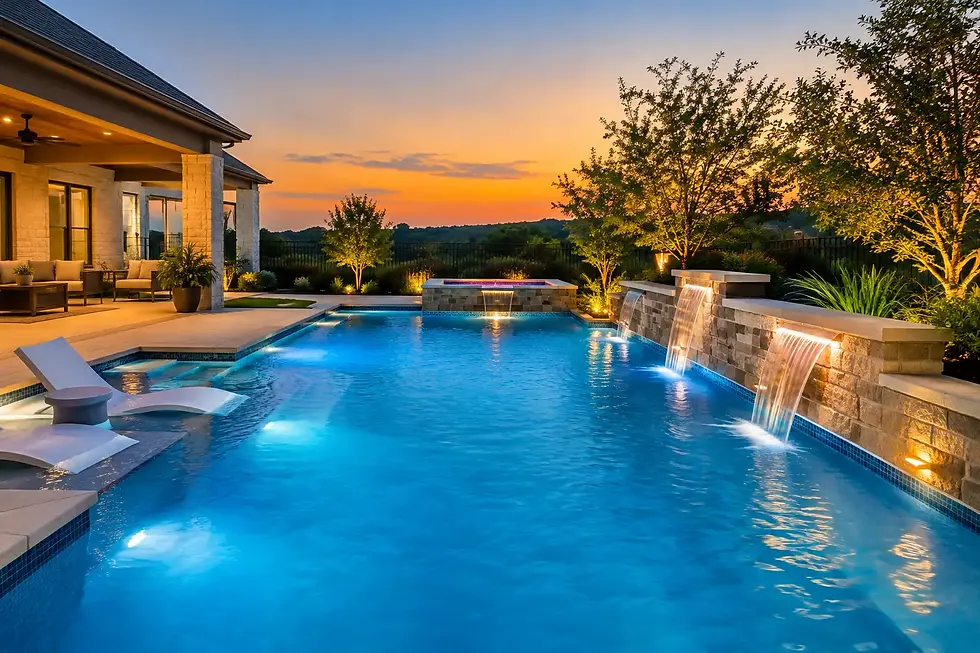
Geometric pools use straight edges, clean corners, and balanced forms such as rectangles, squares, and L-shapes. Their visual simplicity gives the water a calm, architectural presence. Rather than competing with the home, the pool can echo rooflines, window grids, patios, and other details already on the property.
That simplicity is also what makes this style flexible. A long, narrow pool may suit a side-yard layout or a compact backyard in The Woodlands. A wide rectangle can anchor a larger entertaining space in Montgomery or Conroe. An L-shaped design may create distinct areas for swimming, lounging, and a spa without making the yard feel crowded.
A geometric pool does not have to feel stark. Waterline tile, warm-toned decking, lush planting, fire features, and thoughtful lighting soften the lines while preserving the clean, modern character. The goal is contrast with comfort: a backyard that looks refined in daylight and inviting after sunset.
Start With the Way You Want to Use the Backyard
The strongest pool designs begin with lifestyle questions, not a catalog of features. Do you picture kids playing in a shallow area while adults gather nearby? Is exercise swimming a priority? Will the backyard become the center of holiday cookouts, game days, or relaxed nights by the water?
Those answers influence the pool's dimensions, orientation, depth profile, and surrounding hardscape. For example, a long rectangular pool is a natural fit for lap swimming, but its width must still leave enough room for circulation and comfortable lounge seating. A smaller plunge-style pool can be a smart choice when the homeowner prefers a generous covered patio, outdoor kitchen, or open lawn over a larger water footprint.
Sun exposure matters just as much in Texas. Afternoon sun may be welcome on a tanning ledge, but a dining area often benefits from a patio cover or carefully positioned shade. Views from inside the home deserve attention too. A pool that aligns with a main living-space window or a set of sliding glass doors can make the entire property feel more connected.
The pool should fit the property, not force the property to fit it
Every lot brings its own conditions. Setbacks, drainage, easements, elevation changes, mature trees, and utility locations all shape what is practical. A custom design process accounts for these realities early, so a striking concept also functions well once construction begins.
This is where professional 3D visualization can make a meaningful difference. Seeing the pool, patio, spa, kitchen, and shade structure together helps homeowners evaluate scale before materials are selected and ground is broken. It is much easier to adjust a tanning ledge, widen a walkway, or refine a fire feature in a detailed design than after construction is underway.
Features That Add Function Without Adding Clutter
Modern design is often mistaken for minimal design. In reality, a successful geometric pool can include plenty of amenities. The difference is that each feature has a clear place within the composition.
An integrated raised spa is one of the most popular additions. Positioned at one end or along a side wall, it introduces elevation and a soothing sound while maintaining the pool's straight-lined form. A spillway can become a quiet visual centerpiece, especially when paired with tile that complements the home's exterior.
A tanning ledge adds everyday usability for families. It creates a shallow place for younger swimmers to play under supervision and gives adults a comfortable spot to cool off without fully entering the pool. For a more tailored look, the ledge can be sized for in-water loungers, umbrellas, or both.
Other details deserve careful consideration:
Sheer descents create a smooth, contemporary water feature that works especially well along a raised wall.
Deck jets add movement and a playful element, though they should be placed where wind will not carry water onto seating areas.
LED lighting extends the use of the space after dark and can highlight steps, waterlines, and architectural features.
Fire bowls or a linear fire feature add warmth and drama, particularly for homeowners who enjoy evening entertaining.
The trade-off is visual and operational complexity. More features can create a more dramatic experience, but they also require thoughtful equipment planning, maintenance, and a design that avoids feeling busy. Often, one beautifully detailed water feature and a well-lit spa make a stronger statement than several competing focal points.
Materials Set the Mood
A geometric form provides the structure. Materials give it personality. Large-format porcelain pavers can produce a sleek, contemporary patio with clean joints and a low-maintenance finish. Natural stone offers more variation and warmth, making it a strong choice for homeowners who want modern lines with a more organic Texas feel.
Tile selection is equally influential. Deep blue or charcoal waterline tile can create a reflective, dramatic surface. Lighter finishes tend to make the water read brighter and more relaxed. The right option depends on the home's architecture, surrounding landscape, and the atmosphere you want when you look outside.
Decking should be considered beyond color alone. Slip resistance, heat underfoot, drainage, and transitions between the pool, covered patio, and outdoor kitchen all matter. In the Texas heat, a surface that looks beautiful but becomes uncomfortable in direct sun is not a small detail. A well-planned material palette balances appearance, durability, and day-to-day comfort.
Build the Outdoor Room Around the Water
A pool becomes more valuable to family life when the spaces around it are designed with equal care. The patio is where people gather. The kitchen is where the host spends time. The covered area is where guests retreat during a summer shower or a bright afternoon. These elements should feel connected, not added on after the pool is complete.
A geometric layout is particularly effective for organizing an outdoor room. The pool can define one axis, while a covered patio aligns with another. An outdoor kitchen may sit close enough to serve the dining area without placing cooking traffic in the main path to the water. Fire features can be placed where they are visible from the house and seating areas, even when the pool is not in use.
For families, it is also wise to plan sightlines and movement. Parents often want a clear view from the kitchen, patio, or primary living area. Wider deck paths, logical step locations, and designated places for towels and pool toys make the finished space easier to enjoy. Beautiful design should never make everyday use harder.
A Clear Process Makes a Custom Project Feel Manageable
A backyard transformation involves many decisions, but homeowners should not have to coordinate every moving part alone. A design-build approach brings the pool, hardscape, structures, features, and finishes into one cohesive plan from the beginning.
At DreamLife Custom Pools, the process starts by listening to the vision for the property and the life that will happen there. A free consultation helps identify priorities, while custom planning and 3D design give the homeowner a clear view of the proposed space. From there, professional construction turns the concept into a backyard built for years of use.
Budget should be part of that early conversation, not an uncomfortable surprise near the end. Size, access to the yard, site conditions, finishes, equipment, water features, and outdoor-living additions all affect the investment. Financing may also help homeowners phase or pursue the complete backyard they want rather than settling for a disconnected first step.
The right modern pool is not defined by how many features it has or how closely it follows a passing trend. It is defined by how naturally it belongs to your home. When clean geometry, thoughtful materials, and the way your family gathers all work together, stepping into the backyard can feel like arriving at the place you always meant to create.

Comments