


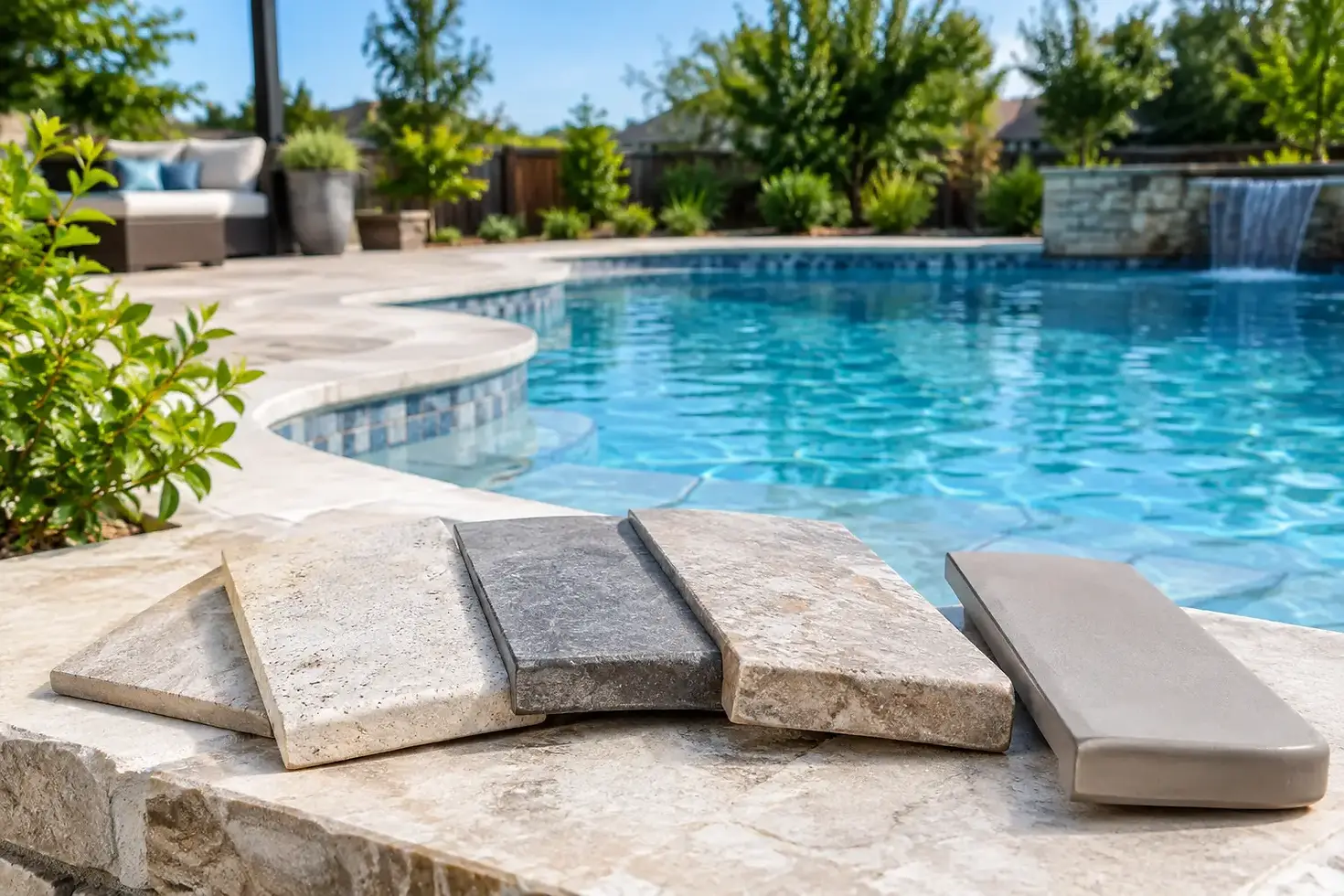
How to Choose Pool Coping for Your Texas Backyard
The waterline tile may catch the eye first, but pool coping is the detail everyone touches. It frames the pool, creates the transition to the deck, and affects how comfortable the edge feels under bare feet on a July afternoon. Knowing how to choose pool coping means looking beyond color samples and selecting a material, profile, and installation approach that supports the way your family will use the backyard for years.
For homeowners in Montgomery County and North Harris County, coping also has to perform through intense sun, heavy rain, humidity, and the occasional hard freeze. The right choice should feel like it belongs with your home, while providing a safe, durable edge around the water.
Start With the Way You Want to Use the Pool
A pool designed for active family weekends has different needs than a refined entertaining space centered on an integrated spa and outdoor kitchen. Before choosing a coping material, think about where people will sit, enter the water, carry food and drinks, and move between the house, patio, and pool.
If children will spend long afternoons swimming, a coping edge with a comfortable, gently rounded profile is often a smart fit. It is easier to hold while resting in the water and less harsh when swimmers bump against it. For a modern geometric pool, a clean square-edge or eased-edge coping profile can create the crisp architectural lines many homeowners want. That look is striking, but it should still be softened enough to feel pleasant and safe at the water’s edge.
The pool shape matters, too. Large-format rectangular pieces complement straight lines and contemporary layouts. Freeform pools typically call for coping that can follow curves gracefully, whether that means custom-cut natural stone or a material available in curved pieces. A beautiful material that requires too many awkward cuts can distract from the design rather than elevate it.
How to Choose Pool Coping That Handles Texas Heat
On a bright Texas day, the surface around your pool can become uncomfortably hot. Material color, density, finish, and shade all influence how coping feels underfoot. This is one reason samples should be viewed outside, not only under showroom lighting.
Light-colored coping generally stays cooler than darker stone or tile. Cream, sand, soft gray, and light beige tones can work especially well with the warm exterior palettes common throughout The Woodlands, Tomball, Conroe, and surrounding communities. That does not mean dark coping is off the table. A charcoal porcelain or deep gray stone can give a pool remarkable contrast, particularly beside a modern home. Just plan for shade, decking choices, and the fact that the edge may retain more heat.
Texture deserves equal attention. Coping needs enough traction to help reduce slips when feet are wet, but it should not be so rough that it is unpleasant to sit on or hard on bare skin. Honed natural stone, textured porcelain, and quality precast concrete products can offer this balance. Highly polished surfaces may look elegant, but they are rarely the practical choice at a busy pool edge.
Compare the Most Common Coping Materials
There is no single best coping material. The best choice depends on the visual character of the home, the pool design, maintenance expectations, and budget. These are the materials homeowners most often consider.
Travertine
Travertine remains a favorite for Texas outdoor living because its natural texture, light tones, and classic appearance work with both traditional and resort-style backyards. It can stay relatively comfortable in the heat and pairs naturally with matching patio pavers, outdoor kitchens, and covered living areas.
Because travertine is a natural stone, variation is part of its appeal. It should be properly selected and installed for pool use, and it will benefit from routine care and sealing when recommended. Some homeowners love the organic movement and small surface voids; others prefer the more uniform appearance of porcelain or concrete.
Limestone and Other Natural Stone
Limestone creates a tailored, substantial look that can connect a pool to a home’s masonry, patio, or landscape walls. Certain varieties are well suited to the Texas climate, while others may be more susceptible to staining, weathering, or changes in color over time. The specific stone matters more than the category name.
A knowledgeable pool designer can help you evaluate density, finish, edge options, and how a particular stone will perform near chlorinated or saltwater pools. Natural stone is an investment, but it brings depth and character that manufactured materials cannot fully duplicate.
Porcelain
Porcelain coping offers a refined, consistent appearance with low water absorption and a wide range of stone-look, concrete-look, and contemporary finishes. It is an excellent option when you want precise color control or want to continue the same material from the pool edge across the patio.
Not every porcelain product is appropriate for coping. Choose a pool-rated option with a proper slip-resistant finish and a coping-specific edge detail. Installation quality is critical, since the material requires the right setting methods and careful attention to expansion and drainage.
Precast Concrete and Cast Stone
Precast coping can deliver clean lines, repeatable sizing, and value without sacrificing style. It is available in many profiles, from traditional bullnose to modern square edges, and can be colored to complement the deck or exterior finishes.
This option is often a practical fit for homeowners who want a polished look and controlled budget. Quality installation and joint treatment make a real difference in long-term performance, especially where soil movement and changing weather can affect hardscape surfaces.
Brick
Brick coping has a timeless place around pools that reflect a traditional home, historic influence, or formal garden setting. It can connect beautifully to an existing brick façade or patio. However, brick can feel warmer underfoot and may not provide the same broad, lounge-friendly edge as stone or oversized concrete coping.
Choose an Edge Profile That Feels Right
The coping profile is the shape of the material at the pool edge. It influences both the visual style and how the pool feels in use. Bullnose coping has a rounded front edge and a familiar, welcoming character. It works beautifully with freeform pools, classic designs, and family-oriented spaces.
Eased-edge coping is lightly softened without being fully rounded. It provides a more current look while remaining comfortable. Square-edge coping creates sharp, modern geometry and is often used on contemporary pools with tile-lined spillways, tanning ledges, and linear fire or water features.
Ask to see the profile at full scale whenever possible. A small sample can make an edge look more dramatic or more subtle than it will feel in real life. This is where 3D design is valuable: it helps you see how coping, tile, deck color, and surrounding features will read together before construction begins.
Plan Coping and Decking as One Surface Story
Coping should not be selected in isolation. It is the bridge between the pool finish and the deck, so it needs to coordinate with both. A contrasting coping can define the water beautifully, while a closely matched material creates a quieter, more expansive look.
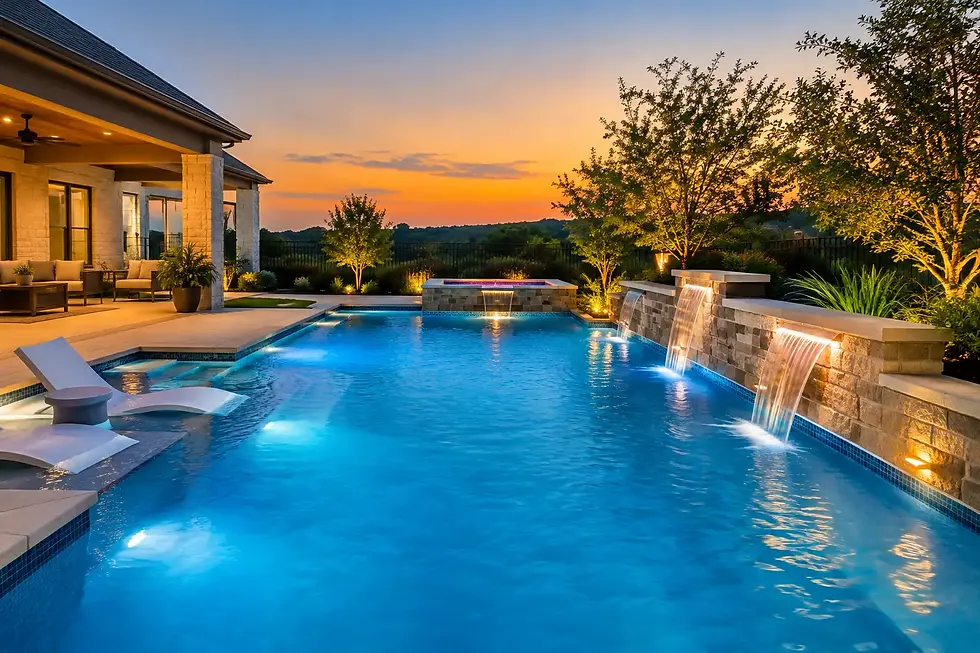
Consider sightlines from inside the home. If the pool is visible through large windows, the coping color may become a prominent design element even when no one is swimming. Also consider nearby features: the stone on an outdoor kitchen, the floor beneath a patio cover, fireplace materials, and landscaping borders. Repeating one undertone or texture across the backyard creates the intentional, property-specific result that makes an outdoor space feel complete.
Be cautious about matching everything exactly. A deck, coping, and waterline tile in nearly identical colors can sometimes make the pool edge disappear. A measured contrast often gives the water a clearer frame and makes the design feel more dimensional.
Do Not Overlook Drainage, Joints, and Installation
Even exceptional coping can fail to perform if the installation beneath it is not designed correctly. The deck should slope away from the pool where appropriate, directing rainwater so it does not collect against the coping or wash debris into the water. This is particularly relevant during the heavy storms common in our area.
Expansion joints and flexible sealants allow the pool shell and surrounding deck to move independently as temperatures change. These details may not be glamorous, but they protect the finished look and help reduce cracking or separation over time. Coping should also be set at the correct elevation to manage splashing and maintain a clean relationship with the waterline tile.
When comparing proposals, ask how the builder handles substrate preparation, drainage, movement joints, and material-specific installation requirements. A lower initial price can become costly if these fundamentals are overlooked.
Balance Upfront Cost With Long-Term Care
Your budget should include more than the price per linear foot. Natural stone may require periodic sealing or more attentive stain care. Porcelain may cost more to install but offer easy day-to-day maintenance. Precast concrete can provide excellent value, though finish quality and long-term appearance vary by product.
Think about the time you want to spend maintaining the space, not just the first-day price. A pool is part of your home, and the coping will be exposed to sunscreen, pool chemicals, weather, furniture movement, and regular use. Choosing a material that suits your real lifestyle protects both your investment and your enjoyment.
At DreamLife Custom Pools, the conversation begins with your home, your style, and how you picture life in the backyard. Bring inspiration photos, exterior finish samples, and honest preferences about maintenance and budget to your design consultation. The right coping is not simply a border around the water. It is the finishing touch that invites your family and guests to step closer, stay longer, and make the backyard their favorite place to be.

Comments