


Concrete Pools Versus Fiberglass Pools: Which Fits?
A pool should feel like it belongs to your home, not like it was dropped into the yard as an afterthought. When homeowners compare concrete pools versus fiberglass pools, the right answer usually comes down to more than budget or installation speed. It comes down to how you want to live outdoors, how much design freedom your property requires, and whether your vision includes a complete backyard destination.
For families across Montgomery County and North Harris County, that distinction matters. A pool may need to work around mature trees, a sloped lot, drainage considerations, an existing patio, or plans for an outdoor kitchen, spa, fire feature, and covered living area. Understanding the strengths and trade-offs of each pool type helps you make a decision that will still feel right years from now.
Concrete Pools Versus Fiberglass Pools: The Core Difference
The biggest difference is how each pool is built. A fiberglass pool arrives as a pre-manufactured shell that is set into an excavated area and connected to the pool equipment. Its shape, depth, steps, tanning ledges, and benches are determined by the model you choose.
A concrete pool, often called a gunite pool in Texas, is constructed on site. The pool is excavated, reinforced with steel, shaped for the property, and finished with materials selected for the design. Because it is built from the ground up, nearly every dimension and feature can be tailored to the home and the people who will use it.
That does not make fiberglass a poor choice. It makes it a more defined choice. Fiberglass can be an excellent fit for homeowners who prefer a simpler, faster installation and find a shell that matches their needs. Concrete is generally the better fit when the backyard itself calls for a custom solution.
Design Freedom: Where Concrete Stands Apart
A pool is often the visual center of an outdoor-living project. If you picture a long, clean-lined pool aligned with a modern patio, a freeform design that follows the movement of the landscape, or an integrated spa positioned for privacy, concrete gives you far more room to create it.
With a custom concrete pool, you can determine the length, width, depth transitions, shape, entry style, tanning ledge placement, and relationship to surrounding features. A narrow side yard might call for a compact lap pool. A large family yard may benefit from a shallow play area, a deeper swim zone, and broad steps that double as a gathering spot. An unusual property line or setback can be designed around rather than treated as a limitation.
Fiberglass designs have improved significantly, with attractive geometric and freeform shell options. Still, you are selecting from available molds. If a shell is two feet too wide, not deep enough, or puts the tanning ledge on the wrong side for your patio layout, there is little flexibility to change it.
Integrated Features Change the Decision
Many homeowners are not building only a pool. They are planning a place for weekend cookouts, quiet evenings, birthdays, and time with visiting family. That is where a fully custom design becomes especially valuable.
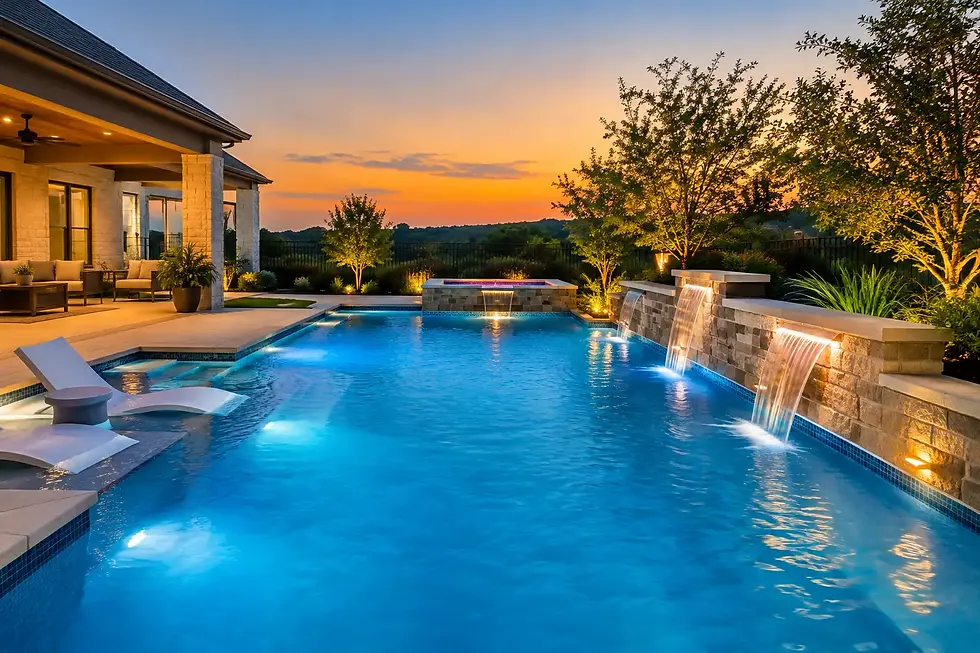
Concrete pools can integrate raised spas, vanishing edges, beach entries, water walls, bubblers, in-pool seating, fire bowls, and custom water features. The pool can also be designed as part of a single composition with decking, drainage, a patio cover, an outdoor kitchen, and landscaping.
A fiberglass pool can include certain accessories and water features, but the shell remains the starting point. If your backyard dream depends on a unified, property-specific layout, concrete offers a stronger foundation for the full experience.
Installation Timeline and Construction Experience
Fiberglass pools are well known for their faster installation potential. Once the shell is manufactured, transportation, excavation, placement, plumbing, backfill, equipment installation, and decking can move efficiently under favorable site and weather conditions. For homeowners focused on getting in the water sooner, that is a meaningful advantage.
Concrete pools take longer because the work is more involved. The construction process includes excavation, steel reinforcement, plumbing, gunite application, curing, tile and coping installation, finish application, equipment setup, and final outdoor details. A custom project also requires thoughtful planning before construction begins so the pool, patio, structures, and utilities work together properly.
The longer timeline is not simply waiting time. It is the process of building a permanent feature around your home, your property conditions, and your lifestyle. The best experience begins with a clear plan, realistic expectations, and a contractor who manages the moving parts from design through completion.
Maintenance, Surface Care, and Everyday Ownership
Both concrete and fiberglass pools need consistent care. You will monitor water chemistry, clean the pool, maintain circulation, and care for the equipment. Automation, quality equipment, and professional guidance can make that ownership far easier, but no pool is maintenance-free.
Fiberglass has a smooth, nonporous gel-coat surface that can make it more resistant to algae growth. That may reduce brushing needs and support a relatively straightforward maintenance routine. The surface is also gentle underfoot, which many families appreciate.
Concrete pool interiors are commonly finished in plaster, aggregate, pebble, or tile. These finishes create a high-end visual effect and allow more personal expression in color and texture. They do require attentive water balance and regular brushing, particularly as a new pool is being started up. Over time, a concrete pool finish will eventually need renovation, but that also creates an opportunity to refresh the pool's look without replacing its structure.
The practical question is not which pool has zero maintenance. Neither does. It is whether you prefer the lower-surface-maintenance appeal of fiberglass or the custom finish options and long-term adaptability of concrete.
Cost: Look Beyond the Starting Number
Fiberglass pools often have a lower and more predictable starting cost because the shell is manufactured in advance and installation is more standardized. For a homeowner with a straightforward yard, a selected shell, and limited custom features, fiberglass can offer an attractive path to pool ownership.
Concrete pools commonly require a larger upfront investment. Custom engineering, excavation conditions, steel, specialized labor, finishes, and integrated features all affect the final price. In the Houston-area market, site realities such as access limitations, soil movement, drainage, utility locations, and existing improvements can also influence either type of project.
The most useful comparison is not a base-pool price against another base-pool price. Compare the finished backyard you actually want. If a fiberglass shell still requires significant decking, grading, drainage work, fencing, landscaping, and separate outdoor-living additions, the gap may be different than it first appears.
A well-designed concrete pool can also support long-term value by creating a distinctive outdoor environment tailored to the home. That does not mean every custom feature is necessary. It means your budget should be directed toward the details that will make the space more usable and meaningful for your family.
Property Conditions in Montgomery and North Harris County
Local conditions should have a real voice in your decision. North Houston properties range from compact neighborhood lots to expansive acreage, and they may include changing grades, drainage patterns, heavy clay soils, easements, tree roots, or limited equipment access.
Fiberglass shells must be transported and lifted into place, so gate width, overhead lines, trees, and access routes deserve early attention. In a tight or obstructed backyard, bringing in a large shell may be difficult or impractical.
Concrete construction is more adaptable when access is limited because the pool is formed and built on site. It can also be shaped to preserve usable yard space, work with a difficult layout, or create a natural transition from the home to a new covered patio or kitchen. Proper drainage and structural planning are essential with either option, especially in a region known for intense rain events.
Which Pool Is Right for Your Backyard?
Fiberglass may be right for you if you want a faster installation, prefer a pre-designed shape, have good site access, and value a smooth surface with comparatively simple routine care. It can be a smart, beautiful choice when the available shell dimensions fit your property and plans.
Concrete is likely the stronger choice if you want a pool designed around your home and lifestyle rather than around a manufacturer’s mold. It is especially compelling for homeowners who want a custom shape, an integrated spa, a specific depth or layout, or a complete outdoor-living environment built as one cohesive project.
Before choosing either path, ask to see the entire backyard in context. A professional 3D design can reveal whether the pool leaves enough deck space, frames the best view, connects naturally to entertaining areas, and provides room for the features your family will genuinely use. DreamLife Custom Pools approaches that early design work as the beginning of the build, not an afterthought.
The pool you choose will become part of everyday life: morning coffee beside the water, kids racing to the shallow end, a quiet soak after a long week, and evenings when nobody wants to go inside yet. Start with the way you want those moments to feel, then build the backyard that gives them a place to happen.

Comments